20 Recommended Ways For Picking Floor Installation
Wiki Article
Nail Down Vs. Glue Down Vs. Floating Hardwood Explained
If you ask three flooring contractors in Philadelphia about the method by which hardwood should be fitted and get three different options -- not because all of them is wrong, but simply because the correct installation method genuinely is based on the unique circumstances of your home. The subfloor's type, flooring's thickness, the species, your moisture needs and your plans for the future for the space all play into the final decision. Most homeowners find out this when they've already made the decision which is the reason you should know the distinctions before you get estimates. Here's how each method actually works and the times when each can be used in a way that makes sense.
1. Nail-Down is the standard for Solid Hardwood
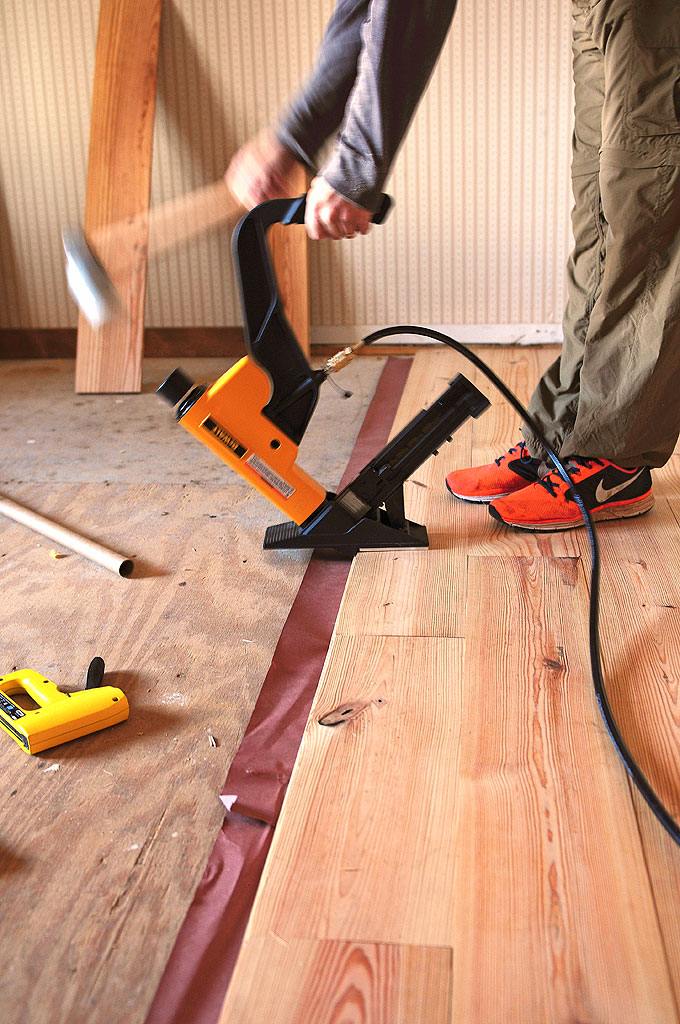
Nail-down or nail-down installation, often called staple-down, involves fixing each hardwood plank onto a wood subfloor, using the pneumatic nailer. This is the oldest method, and remains the most commonly used way to install solid hardwood in Philadelphia homes with either plywood or OSB subfloors. The connection is firm, it feels solid underfoot and there's nothing which could fail in time. A majority of flooring companies will opt to nailing down solid hardwood on subfloors that are above grade without hesitation.
2. The subfloor of your home determines if nail-down is even an option
Flooring that nail down wood requires a wood underfloorit's a full stop. Concrete slabs, that are found on the ground floors of basements and in a few spaces of Philadelphia homes as well as Delaware County ranches, cannot be used with staples or nails in any meaningful way. If your subfloor is made of concrete nail-down is not on the table regardless of what flooring material you choose to use. An experienced flooring installer with a license will recognize this on a visit to the site; however, an unexperienced person might not realize it until after the job has started.
3. Glue-Down Opens Up Concrete Slab Installations
The glue-down hardwood installation employs an adhesive that is spread across the subfloor prior to planks being placed in. It's the method of choice when you want real hardwood over concrete. This includes basements that are in Montgomery County colonials, ground-floor slabs in newer South Jersey construction, or any area where nailing down isn't practical. If done correctly, a gluedown floor is extremely stable and offers a low amount of flex. The drawback is that removing it afterward is much more laborious in comparison to pulling up a nail flooring or floating one.
4. The floating Hardwood Isn't Connected to Subfloor at All
Floating installations mean that the planks become locked together at their edges. They then rest on over the subfloor as the same surface. They move in a single unit, instead of being fixed in place. It's easier to install and it's easier to remove, as well as better able to withstand subfloor imperfections than nail-down. Engineered hardwood is by far the most popular possibility for floating installation in Philadelphia -- its layered structure handles the slight movements that comes with a floating arrangements better than solid wood does.
5. Floating Floors Create a Unique Feel underfoot
This is something that showrooms aren't always able to convey. Floating hardwood can have a subtle move when you walk across it. It's nothing dramatic but noticeable in comparison to a nail-down floor that's locked close to the subfloor. For most homeowners it's a minor issue. However, for some, specifically those who have upgraded from nail-down hardwoods, there is an adjustment. If this is an issue for you have a flooring expert ask if you can walk in a floor that is floating before signing.
6. Nail-Down has the highest labor costs of three
From a simple installation point of view nail-down hardwood will require the most time and skill that is evident in the labor estimates you'll get from Philadelphia flooring contractors. The subfloor must be spotless with a flat surface and be thick. The planks must be acclimatized. The nailer needs to be used with care to avoid splitting. Flooring installers who nail-down proficiently are earning their fee. If you get a low hardwood installation cost It's a good idea to inquire which method they'll use to fasten it.
7. Glue-Down Adds Material Cost but is a good way to save some labor Variables
Adhesive can be expensive, and glue-down applications require the right material that's matched to the subfloor and hardwood combination. But, glue-down installations over a well-prepared concrete slab will go more quickly than nailing on subfloors that require extensive repair. Flooring contractors across Bucks County and Delaware County generally recommend glue-down on engineered timber in slabs-on-grade construction in particular because it provides real wood aesthetics with practical installation advantages.
8. Moisture Testing must be done prior to the method chosen is even considered.
This step is often skipped on budget jobs, which causes issues within a year. Concrete slabs are known to emit moisture-vapor and excessive moisture can cause glue-down adhesive to fail, and the floors floating to break. Wood subfloors found in older Philadelphia rowhomes can be subject to excessive moisture from crawlspaces or poor ventilation. A reliable moisture reading prior to installation isn't an option -- it's how a competent flooring contractor decides what method is safe as well as what prep task is required prior to.
9. Refinishing compatibility varies by method
Nail-down solid wood can usually be sanded several times over its life -- it's one of strong arguments to consider regardless of the price of installation. Glue-down engineered hardwood can usually be finished either once or twice dependent on the wear layer thickness. Floating engineered flooring may contain a few refinishing possibilities. If long-term maintenance of your wood floor is an option it is important to take into account this method decision before installation, not after.
10. A better method is to make A Site Decision, Not a Preference Decision
Homeowners might come to flooring consultations with a predetermined concept of what type of installation they want. A seasoned flooring contractor in Philadelphia will gently reorient the conversation toward what the specific home's requirements are. The best flooring contractors aren't offering a pre-determined methodThey're taking a look at your subfloor, the moisture levels, your floor level, and the species of wood you have and then recommending the best option. This site-specific understanding is what sets a certified professional in comparison to someone who is just a user of a nailer. Read the recommended
LVP flooring contractors Philadelphia for blog tips including flooring installation Montgomery County PA, flooring installation cost Philadelphia, solid hardwood floor installation Philadelphia, floor installation Delaware County PA, floor installation Delaware County PA, floor sanding and refinishing Philadelphia, flooring contractors Bucks County, flooring estimate Philadelphia, hardwood floor installation cost Philadelphia, glue down hardwood flooring Philadelphia and more.

Serving Bucks, Montgomery & Delaware County What's New
Homeowners in the Philadelphia suburbs often assume that flooring contractors located in the city don't have to travel, or that local county contractors are always the better call for work within their region. In reality, it's more nuanced. The best flooring contractors serving the region operate seamlessly between Philadelphia, Bucks County, Montgomery County, Delaware County and eventually into South Jersey because the demand across the metro is interconnected and the housing stock is a good mix of common features to make regional knowledge truly valuable. What is different between these regions in terms of housing styles, subfloors, eras of construction and neighborhood aesthetics is important to understand before you begin pulling names of contractors from an internet search result, and then assuming that geography alone is a valid quality filter.
1. Each County has its own Dominant Housing Profile
Bucks County skews toward older housing in boroughs like Doylestown and Bristol alongside newer suburban construction further north. Montgomery County mixes mid-century colonials and ranches, as well as affluent Main Line properties that have distinct renovation expectations. Delaware County has dense inner-ring suburbs containing older rowhome-adjacent property close by the city and then transitioning to more sprawled-out residential developments as you move to the west. These variations are significant for flooring because the subfloor's condition, method of construction, and humidity characteristics vary considerably by area and era of construction -any contractor with experience in the area will recognize the patterns without needing explained.
2. Subfloor Condition Vary Significantly across the County
Some older Delaware County homes close to the Philadelphia border -- Darby, Upper Darby, Lansdowne generally share the same subfloors and issues with moisture that are common to city rowhomes. Bucks County properties further from the urban core often have better subfloor conditions than newer constructions, but they face more severe moisture problems in older houses near by the Delaware River. In Montgomery County, Main Line homes can have original hardwood over subfloors that hadn't been changed in 60 years. An experienced flooring company that has been working across the three counties understands these patterns, and rates accordingly instead of being shocked at the end of the project.
3. Hardwood Flooring Expectations are Up on the Main Line
The Montgomery County's Main Line corridor -- Bryn Mawr, Haverford, Wayne, Ardmore -- is known for its renovation culture, where hardwood flooring quality requirements are specific. The homeowners of these areas typically request wide plank white oak as well as custom staining to millwork and cabinetry, as well as refinishing work that is up to the highest aesthetic standards. Flooring contractors who work in Montgomery County regularly understand that the bar for quality finish in these areas is higher than a typical suburban remodel, and they have their equipment and staff accordingly.
4. Bucks County's Newer Construction Creates Different Installation Conditions
Newer developments for residential construction with a focus on Bucks County -- particularly in Warminster, Horsham, and parts further north generally feature open-plan layouts with higher square footage, slabs-on-grade construction in certain areas and subfloors in better condition than older housing in the county. LVP flooring installation is particularly designed for these newer Bucks County homes: the greater area benefits from LVP's price efficiency, open plans suit floating installation and slab-grade floors can make waterproof flooring a feasible essential feature in the main living areas.
5. Delaware County's Inner Suburbs, which share Philadelphia's flooring challenges
Flooring contractors who understand Delaware County well will tell you that houses located in Upper Darby, Drexel Hill and Havertown contain the same subfloor issues as Philadelphia in general -- boards subfloors, moisture from aging foundations, and hardwood that was last touched decades ago. Refinishing wood floors across these locales is always in demand because the housing stock has original hardwood that's survived for long enough to be worth keeping, but has been neglected for a long period of time and appears as though it's no longer. Making the right assessment requires someone who knows the difference between floors that require finishing and one that requires replacement.
6. South Jersey Serves as a Natural Extension that is part of Philadelphia Market
South Jersey -- Cherry Hill, Voorhees, Moorestown, Haddonfield and surrounding areas is part of the real Philadelphia flooring market, even though it's located across the state border. Many flooring contractors in the Philadelphia area operate in Pennsylvania and New Jersey and service South Jersey regularly. Homeowners in South Jersey searching for flooring installers shouldn't restrict their search to New Jersey-only contractors -- the regional pool of experienced flooring professionals includes many Philadelphia-based and Pennsylvania-suburban companies who cross the river routinely.
7. Service Area and Travel Fees Policies may vary -- inquire Upfront
The flooring contractor in Philadelphia not all has a presence in all three counties and not every local contractor covers the full county. Some offer travel-related surcharges for projects that go beyond a specified distance away from their base. Others build it into their pricing without divulging it separately. When you are getting estimates for flooring across Bucks, Montgomery, or Delaware County, ask specifically how much the estimate will include fees for travel or service area. Any contractor who is open about this upfront is handling the business relationship professionally. If they do not disclose it until after the contract has been discussed isn't as good.
8. Permit requirements can differ by the municipality.
Pennsylvania home improvement contractor registration is available across the state, however individual municipalities throughout Bucks, Montgomery, and Delaware County sometimes have their individual registration requirements, or permits for contractors who work within their boundaries. It's less prevalent specifically for flooring than construction work, but it is important to confirm with your contractor that you are aware of local rules in your particular township or locality. Certified flooring installers who work regularly throughout the region know what municipalities have additional requirements and can incorporate them into plans without being prompted.
9. Regional Contractors establish networks that Benefit Customers
It is a flooring specialist who's had experience in Philadelphia and surrounding counties for years has relationships with suppliers or subcontractor networks as well as professionals who have connections that a newer or more restrictedly local contractor doesn't. This is especially true in situations where a job involves an issue with the subfloor that requires someone to carpenter the floor, when an specific hardwood species requires rapid sourcing, or if the tile installation requires an expert in waterproofing. The most reliable flooring contractors in this region are the nodes of a professional network, not a single operator working on their own -- and their customers reap the benefits of that network connectivity when unexpected events occur in the middle of a project.
10. The most effective regional contractor is the One who Knows Your Home's Style
County boundaries aren't much more important in comparison to the type of home you've been familiar with regarding flooring. A flooring company that has completed fifty refinishing jobs for hardwood in the early years of Delaware County colonials knows things about those floors and a construction contractor who works on new Bucks County construction does not -and in reverse. If you're reviewing flooring contractors in this area, inquire specifically about their experiences working on homes of your old-fashioned their construction methods, and not only their general service area. The answer to that question will tell you more about the suitability of their services to work with you than any map of where they're willing to drive. Take a look at the top Have a look at the top free flooring estimate Philadelphia for blog info including engineered hardwood installation Philadelphia, ceramic tile flooring Philadelphia, custom hardwood staining Philadelphia, luxury vinyl plank installation Philadelphia, luxury vinyl plank installation Philadelphia, flooring contractors Montgomery County PA, flooring installation cost Philadelphia, subfloor repair Philadelphia, hardwood floor refinishing Philadelphia, kitchen tile flooring Philadelphia and more.